Consumer Packaged Goods.
Every production line has a history. Graphon answers from your training videos, SOPs, manuals, quality records and more.
How does the oven’s temperature profile affect the bread and what did the instructor say to watch out for?
One answer, pulled together from the training video, the slide on screen, the oven manual and the software guide.
answered from 3 of 2,840 sources
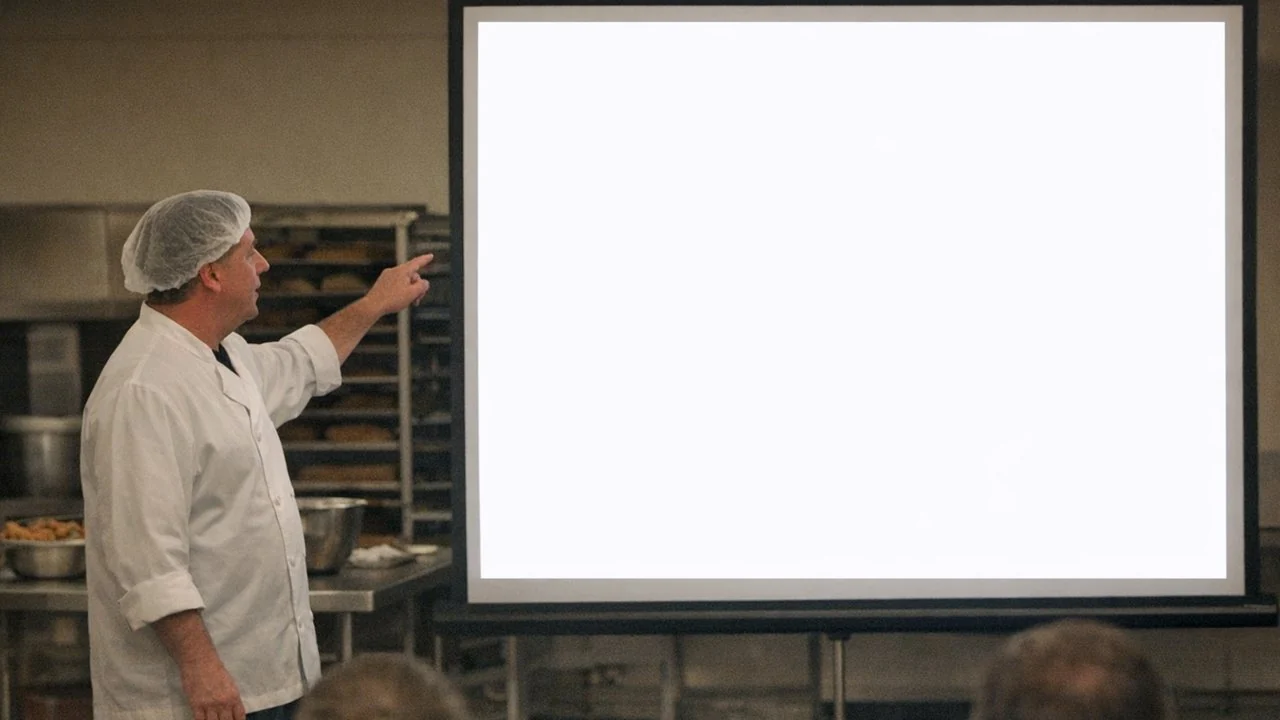
The instructor explains that an early temperature rise can produce drier, harder bread, while a delayed profile can leave the product weak and prone to collapse.
In the example discussed, he also flags a temperature drop near the end of the bake. He suggests a shorter bake or the oven taking time to recover temperature as possible explanations—not confirmed causes—and says to check the profile in the measurement software.
Tunnel oven · operating manual
§ 6.3 Temperature recovery
Each zone holds its set temperature while the band is loaded evenly.
After a door opening or a gap in product, zone temperatures fall and take several minutes to recover.
Recovery time is recorded in the zone log.
Profile logger · user guide
§ 5 Checking an end-of-bake drop
A dip in the last zone can mean a shorter bake or a zone still recovering.
To tell which, open the bake’s profile and compare the final zone against its set point and the bake length.
Mark the run so the next shift can compare against it.
How the temperature rises matters.
1 · profile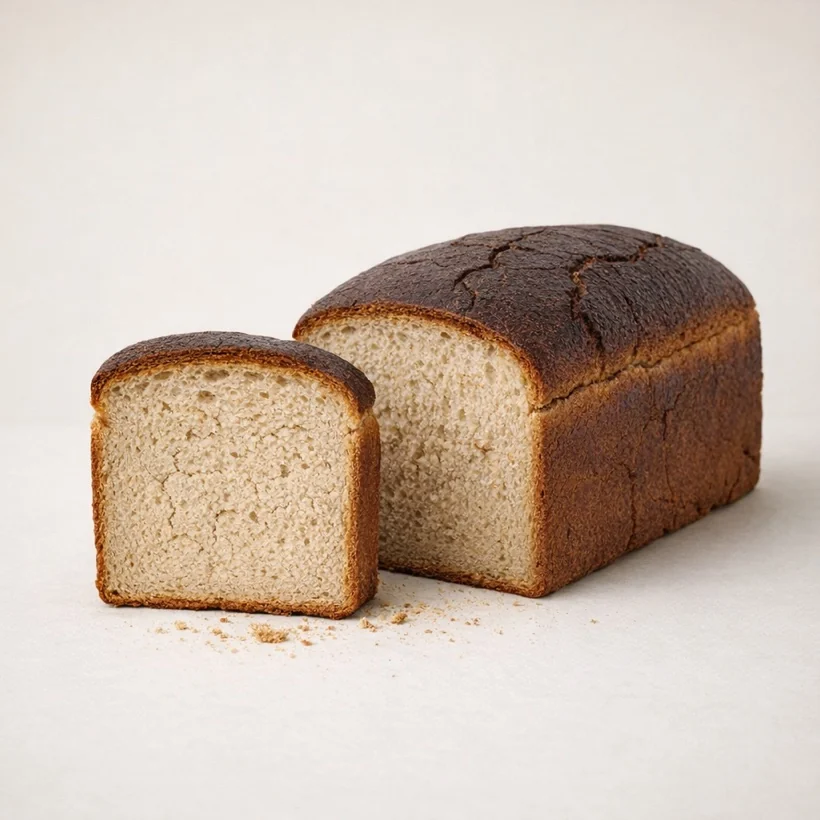
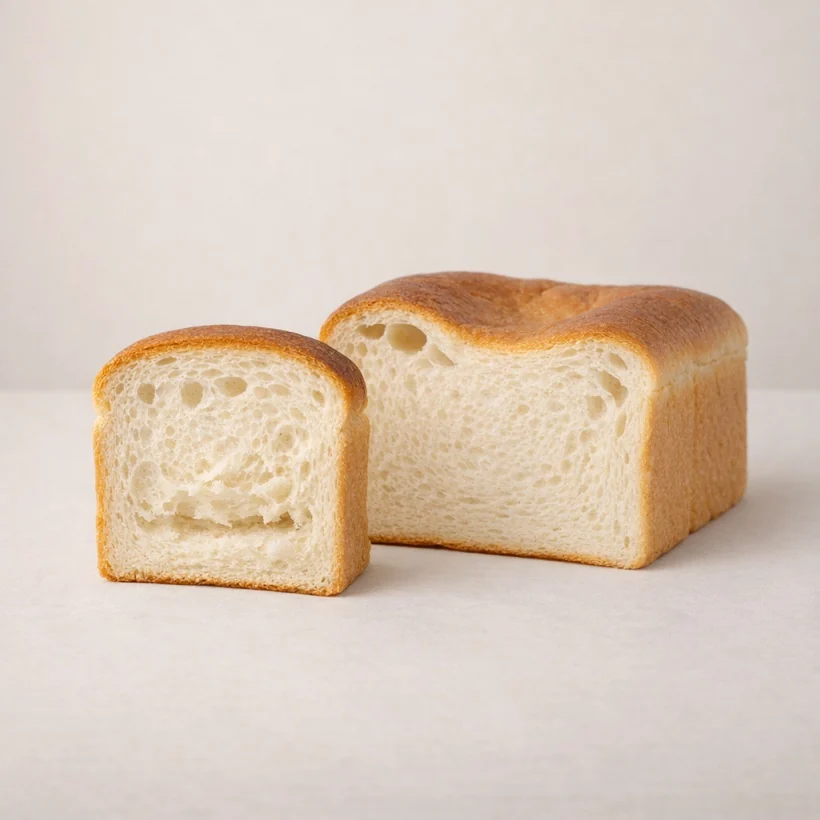
The instructor associates an early rise with drier, harder bread.
Tunnel oven · zone air temperature, two bakes comparedWhat the instructor explained
Bakery training · session 3 · 12:40 · slide 14, “Oven temperature profile”
Instructor explanation · paraphrased
Before we get to the curves, keep in mind the band is loaded continuously, so every zone sees a steady stream of product and small changes add up over a shift. An early temperature rise can produce drier, harder bread. Crust color is a separate question, and we’ll come back to it in the next module along with how the loading pattern changes through the day.
What to watch out for 2
Profile logger · line 3 · last 8 minutes of the bake
Temperature drops near the end of the bake.
A shorter bake, or time needed for the oven to recover temperature.
He says to verify the profile in the measurement software.
One question, answered from the footage, the photos and the paperwork together.
Why did these go out with no label at all?
searched 640,000 line-camera clips · 12 plants · 8.4 M entities
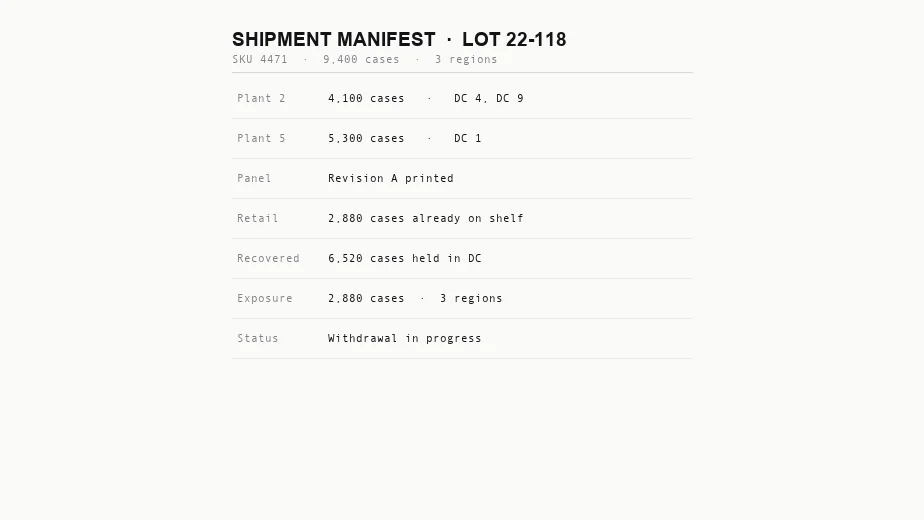
Because the artwork never reached the line. Camera 4 shows cans coming off the filler with nothing printed on them1, and the same week the second plant was running bottles the same way2. The new label was approved on 3 March and never sent to either plant3, so the labeller had nothing to apply. 2,880 cases shipped blank, across three regions4.
Coming off blank
Camera 4 · line 3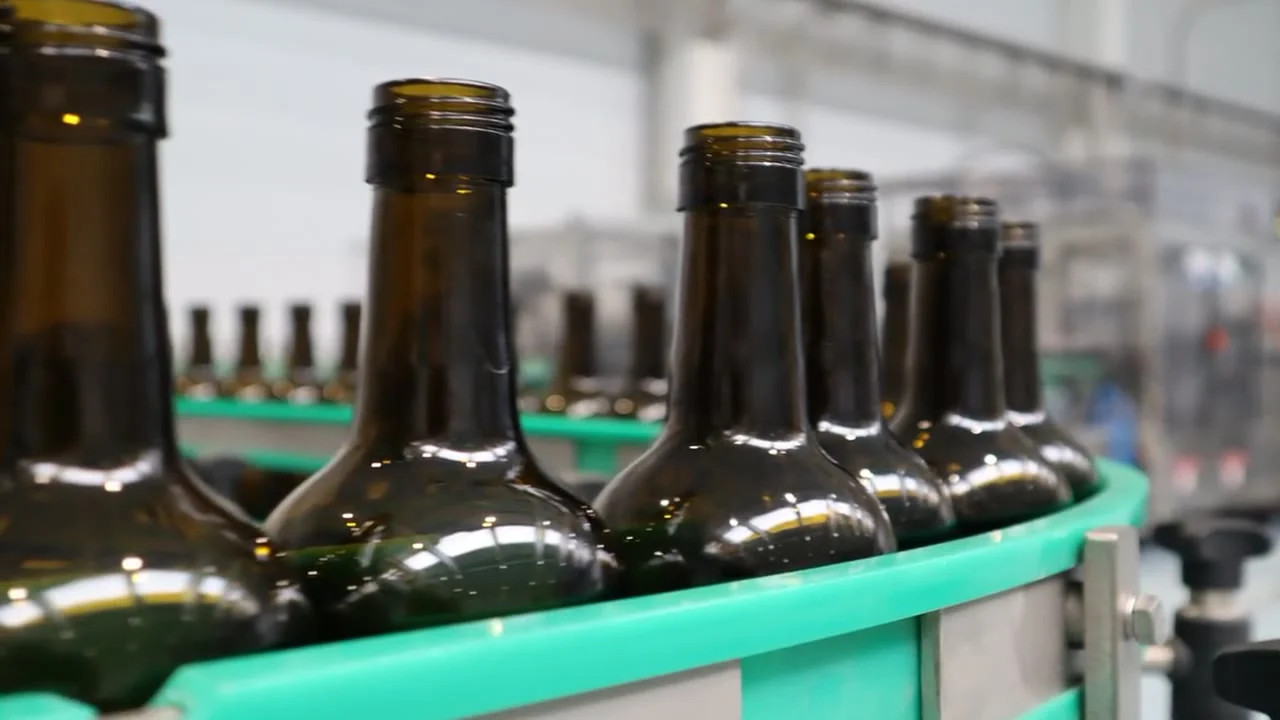
Second plant, also blank
Plant 2 · bottle line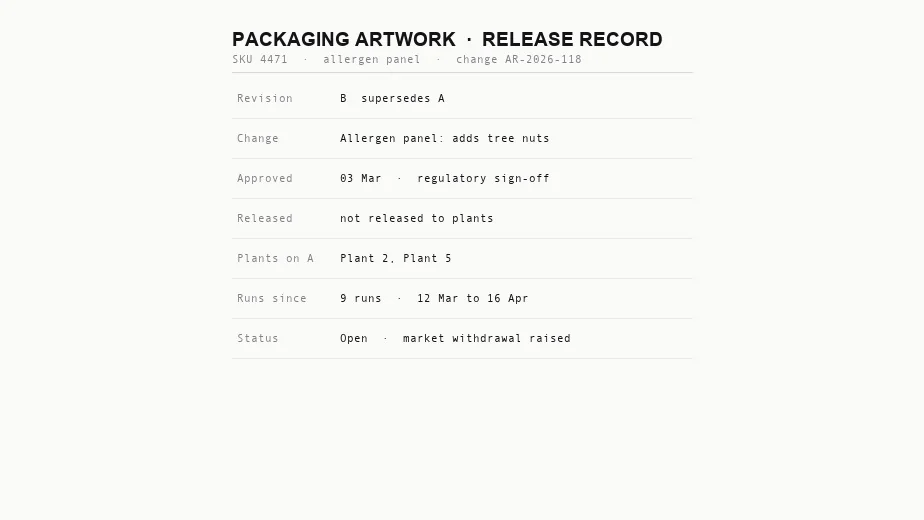
Approved, never sent out
Label approval record